Cart
0
Liquid error (snippets/sn-cart-drawer line 174): Could not find asset snippets/sn-cart-upsell.liquid
 Skip to content
Unable to load menu items. Please try again.
This collection is empty
Unable to load menu items. Please try again.
This collection is empty
Unable to load menu items. Please try again.
This collection is empty
Unable to load menu items. Please try again.
This collection is empty
Unable to load menu items. Please try again.
This collection is empty
Calculate your ROI
Unable to load menu items. Please try again.
This collection is empty
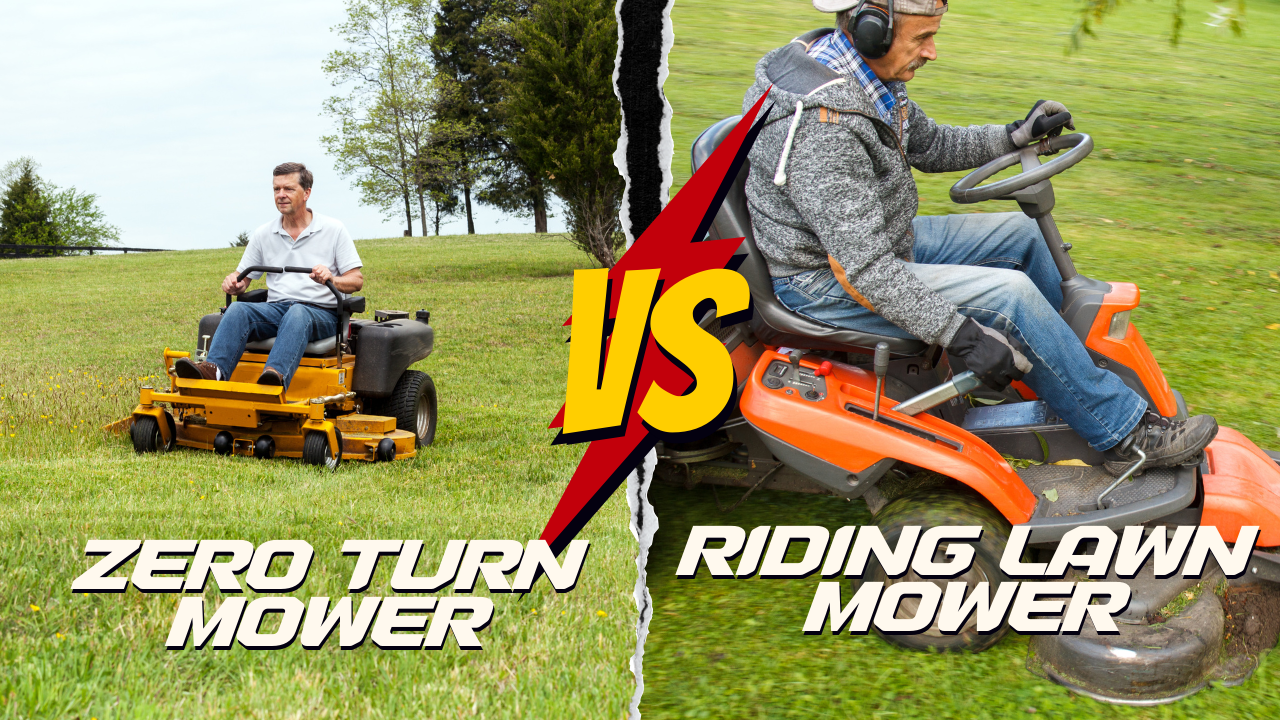


| Feature | Zero-Turn Lawn Mower | Riding Lawn Mower |
| Maneuverability | Extremely agile with a near-zero turning radius, allowing precise mowing around trees, flowerbeds, and tight spaces. Ideal for complex landscapes. | Moderate turning radius, making it less effective in navigating around tight spots. Better suited for open, unobstructed lawns. |
| Speed | Typically faster, with mowing speeds ranging from 5–8 mph, reducing mowing time for large yards. | Slower, generally 3–5 mph, so mowing can take longer, especially on larger properties. |
| Cut Quality | Provides a cleaner, more consistent cut due to the ability to maintain a steady line and speed even around obstacles. | Good cut quality but can be uneven in tight or tricky areas where multiple passes are needed. |
| Terrain Handling | Performs best on flat or slightly uneven ground; struggles on steep slopes because of traction limitations. | More stable on slopes and uneven ground due to traditional steering and lower center of gravity. |
| Learning Curve | Requires practice to master dual-lever steering; can be challenging for beginners. | Easier to operate with a standard steering wheel, making it more beginner-friendly. |
| Comfort & Ergonomics | Often comes with high-back seats and suspension options, but rougher ride on uneven terrain due to higher speed. | Generally offers a smoother ride on uneven ground and feels more like driving a small car. |
| Versatility | Primarily designed for mowing; limited options for attachments like snow plows or garden carts. | Can tow a variety of attachments, such as spreaders, carts, and snow blowers, making it more versatile for year-round use. |
| Maintenance | More complex hydrostatic drive systems may require higher maintenance costs over time. | Simpler mechanics and drive systems make them easier and often cheaper to maintain. |
| Cost | Higher price point — quality residential models start around $3,000–$5,000, with commercial models exceeding $10,000. | More affordable — entry-level models start around $1,500–$3,500, with premium versions going higher. |
| Best For | Large, flat yards with many obstacles; homeowners or landscapers who prioritize speed and precision. | Medium to large lawns, especially those with slopes, uneven ground, or mixed tasks beyond mowing. |
Check your welcome email for exclusive discounts.
We are unable to verify your email address.
Please check if the email
is correct.
Featured in Article
Leave your email and we'll let you know as soon as this product is back in stock.
Check your welcome email for exclusive discounts.
We are unable to verify your email address.
Please check if the email
is correct.