| Type |
Navigation Method |
Best For |
Setup & Flexibility |
| Wired (Perimeter Wire) |
Detects a physical boundary wire. |
Smaller, flat lawns. |
Less flexible; requires laborious trenching and rewiring if the lawn layout changes. |
| Wire-Free (RTK-GPS/AI-Vision) |
RTK-GPS, AI-powered vision systems, and inertial sensors. |
Large, complex, or evolving landscapes. |
High precision (centimeter-level); faster setup since it removes the hassle of laying and maintaining physical wires. |
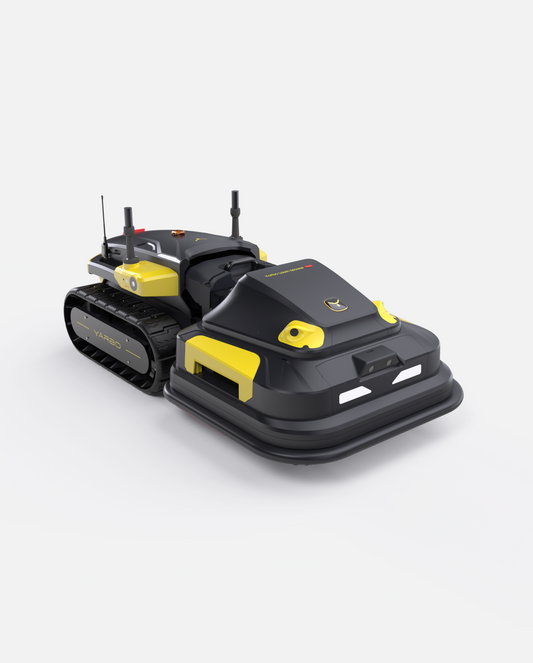
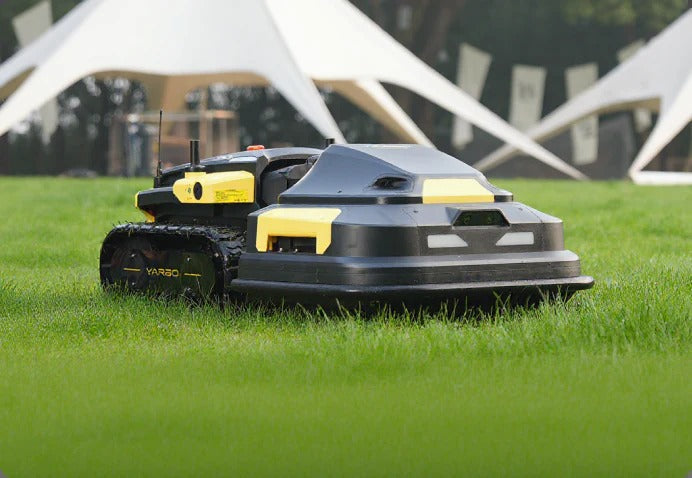
Yarbo stands out by using a wire-free approach with RTK-GPS, AI-powered vision systems, and inertial sensors for precise, centimeter-level navigation. This is especially useful for complex, tree-dotted lawns where GPS signal loss can be a challenge.
How Robotic Lawn Mowers Work?
But how do robot lawn mowers work?
Technology is reshaping how homeowners care for their lawns. Artificial intelligence, IoT connectivity, and full automation are transforming traditional mowing into a smarter, more precise, and labor-saving experience.
Yarbo stands out as a prime example of this shift, combining advanced hardware and intelligent software to deliver seamless lawn care.
AI & Precision Navigation
Yarbo integrates RTK-GPS, binocular cameras, and IMU sensors to achieve centimeter-level navigation accuracy.
Unlike traditional mowers that move randomly or rely on boundary wires, Yarbo maps your yard intelligently, creating efficient mowing patterns such as checkerboard, spiral, or parallel lines.
The system adapts in real time to obstacles, slopes, and irregular terrain, ensuring no patch of grass is left behind.
IoT & Smart Connectivity
With Wi-Fi, Bluetooth, and 4G support, Yarbo automatic lawn mower robot connects directly to a smartphone app, giving homeowners full control over robotic mowing anywhere, anytime.
Through the app, you can schedule mowing sessions, monitor real-time performance, assign different mowing zones, or even control the mower manually if needed. Push notifications keep you updated on task completion, charging status, and maintenance alerts.
Automation & Labor Savings
Savings: The All-Season Advantage For large properties, automation is not just a convenience—it’s essential. Yarbo takes over repetitive tasks like mowing, snow blowing, and leaf clearing, operating day or night without constant supervision.
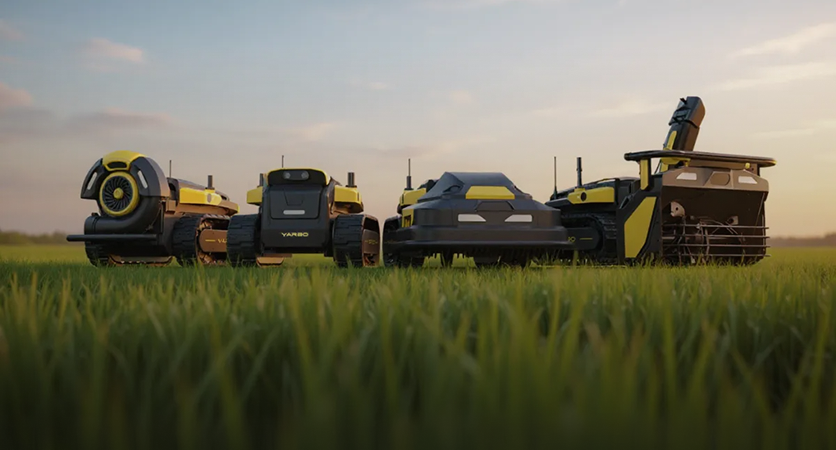
Its unique modular design means it's essentially three robots in one, capable of year-round yard maintenance. This drastically reduces manual labor, allowing homeowners to effortlessly maintain acres of land while truly reclaiming valuable time, fulfilling the promise of 'Your Big Yard. Your Free Time.
All-Terrain Mastery By Yarbo
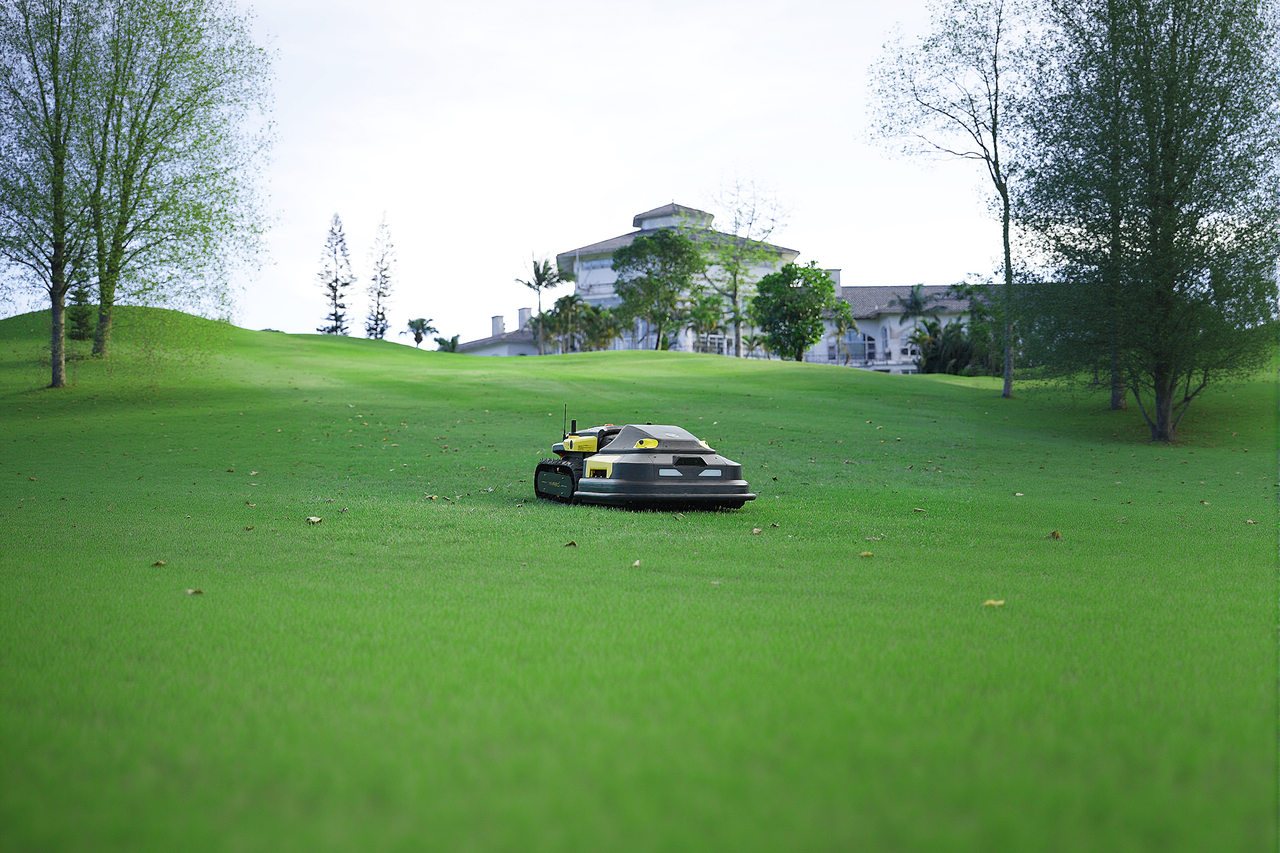
Unlike most automatic lawn mower robots that are limited to flat suburban lawns, Yarbo thrives on challenging terrain. Its torsion-flexible mower frame and patented all-terrain tracks allow it to climb slopes up to 35° (70% grade), maneuver over bumps, and handle uneven ground with ease, even on wet or muddy surfaces.
This makes Yarbo uniquely capable of maintaining complex and expansive properties where conventional robotic mowing struggles.
Yarbo's Proven Capabilities:
-
Handles up to 6 acres (25,000 m²)—roughly double the nearest competing robotic mower.
-
Climbs slopes up to 35° (70% grade) with superior traction.
-
Features a dual-disc floating deck with adjustable height (0.8–4.0 in on Pro version and 1.2 to 4.0 inches (3–10 cm) for the regular version).
-
Mows ~120 minutes per charge (covering ~0.25 acres per cycle), with smart return-to-dock for autonomous recharging.
-
Includes rain sensors and customizable mowing zones via the app.
-
Its rugged, heavy-duty build is designed for the demanding four-season North American environment. See Yarbo conquer real-world challenges! Visit our 'See the Proof' section for authentic user videos showcasing Yarbo on extreme slopes and complex terrains.
Step-by-Step: Setting Up Your Robotic Mower (HowTo Guide)
The wire-free setup simplifies the process by eliminating boundary wire installation. Follow these steps for activation:
-
Select Dock Location: Choose level ground with a clear line of sight to satellites for optimal RTK base station performance.
-
Power Dock & Base Station: Ensure reliable power and stable positioning for the charging dock and RTK base station.
-
Power On & Map: Power on the robot and use the smartphone app to map your yard and define mowing zones.
-
Configure Settings: Set the mowing schedule, patterns (e.g., checkerboard, spiral), rain response, and remote access via the app.
-
Test Run: Manually monitor the first run to ensure the mapping and settings are correct, then allow it to operate autonomously.
-
Routine Maintenance: Keep the blades sharp, the dock area clear, and monitor for software updates via the app.
Buying Considerations: Investment, Lawn Size, Terrain & Support
Price
Yarbo represents a premium investment, with the Core unit starting around $4,999 and the 4-in-1 Yard Robot bundle at $6,999 (Pro module $5,999 pre-order). While the upfront cost is significant compared to entry-level models, it’s crucial to view
Yarbo as a long-term investment that replaces at least three major yard machines (mower, snowblower, leaf blower). Many owners find that Yarbo can pay for itself in approximately 2-3 years by eliminating contractor fees for lawn mowing and snow removal, which can easily run thousands of dollars annually for large properties.
This leads to a significantly lower total cost of ownership (TCO) over time. To make this investment more accessible, we offer flexible payment options (e.g., Affirm, Klarna) at checkout, allowing you to pay in convenient monthly installments.
Lawn Size & Terrain
Setup & Maintenance
Setup is simplified with Yarbo's wire-free design, meaning no laborious trenching for boundary wires. You'll need a clear location for the dock and RTK base station. Initial yard mapping and zone definition are done easily via the smartphone app.
While some advanced add-ons may have a learning curve, Yarbo is designed for low ongoing maintenance. As an electric, battery-powered robot, it requires no gas or oil changes.
Routine tasks primarily involve keeping blades sharp, the dock area clear, and monitoring for software updates. Wireless auto-recharging further enhances convenience.
Reliability & Support
-
As a testament to its durability and our commitment to customer satisfaction, Yarbo offers an industry-leading 5-year warranty, the only brand in the yard robot industry providing such comprehensive coverage for all major components without registration or additional fees.
Our YarboCare™ 5-Year Confidence Plan includes:
-
5 Years of Total Warranty.
-
3-Year Accidental Protection (covering drops, collisions, lightning, surges, and weather-related damage, protected by AIG).
-
Door-to-Door Shipping Protection for loss or damage during delivery. We also provide 24/7 customer support, a 30-day risk-free trial, and actively respond to warranty claims. While early campaigns faced delivery challenges, the company is dedicated to continuous improvement and stands behind its product with robust support. Learn more about our support network and see real customer stories in our 'Trust Center'Setting Up Your Robotic Mower
-
Select Dock Location: Level ground with a clear line of sight to satellites.
-
Power Dock & Base Station: Ensure reliable power and stable positioning.
-
Power On & Map: Let the mower map your yard and define mowing zones.
-
Configure Settings: Set mowing schedule, patterns, rain response, and remote access via app.
-
Test Run: Monitor first run manually, then let it operate autonomously.
-
Routine Maintenance: Keep blades sharp, dock area clear, and monitor software updates.
Pros and Cons to Consider
 Skip to content