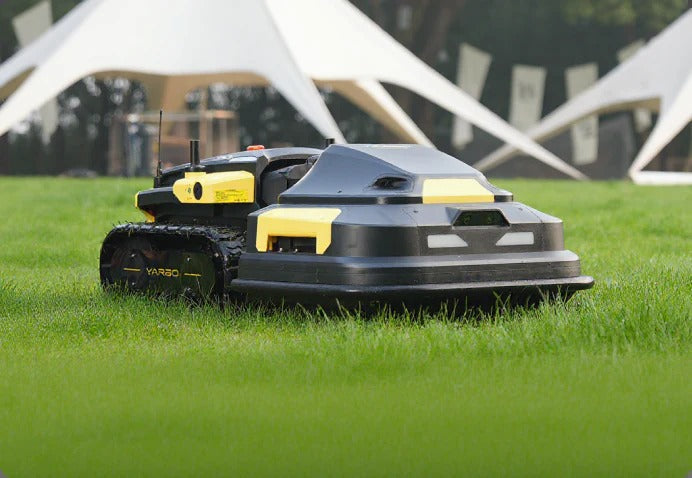
Does Automatic Lawn Cutter Work? Discover the Truth About Robot Lawn Edgers

Image
Robot lawn mowers have transformed the way homeowners maintain their yards. These intelligent machines—often referred to as automatic lawn cutters—deliver convenience, efficiency, and a consistently manicured lawn without manual effort. But there’s one question that homeowners often ask: Do robot mowers cut edges?
 
The truth is, while robot mowers excel at mowing large, open areas, most models struggle with trimming along fences, walls, and garden borders. That’s where advanced solutions like the Yarbo Robotic Edger step in. By combining cutting-edge AI technology with precision trimming capabilities, Yarbo bridges the gap between mowing and edging—ensuring your lawn looks polished from every angle.
 
In this article, we’ll uncover the reality behind robot mowers and edge cutting, explore why edging is a challenge, and show how Yarbo’s innovative robotic trimmer provides the ultimate solution.
Table of Contents:
Understanding Cutting Edges in Automatic Lawn Cutter
Why Robot Mowers Struggle with Lawn Edges?
Technologies Enhancing Edge Cutting
Limitations and Challenges
User Experiences and Reviews
Future of Edge Cutting in Robotic Mowers
FAQs

Understanding Cutting Edges in Automatic Lawn Cutter

What Is Edge Cutting?

Edge cutting refers to a mower's ability to trim grass along the perimeter of a lawn, including areas adjacent to fences, walls, trees, and garden beds. Effective edge cutting ensures a uniformly manicured appearance without the need for manual trimming.

Importance of Edge Cutting for Lawn Aesthetics

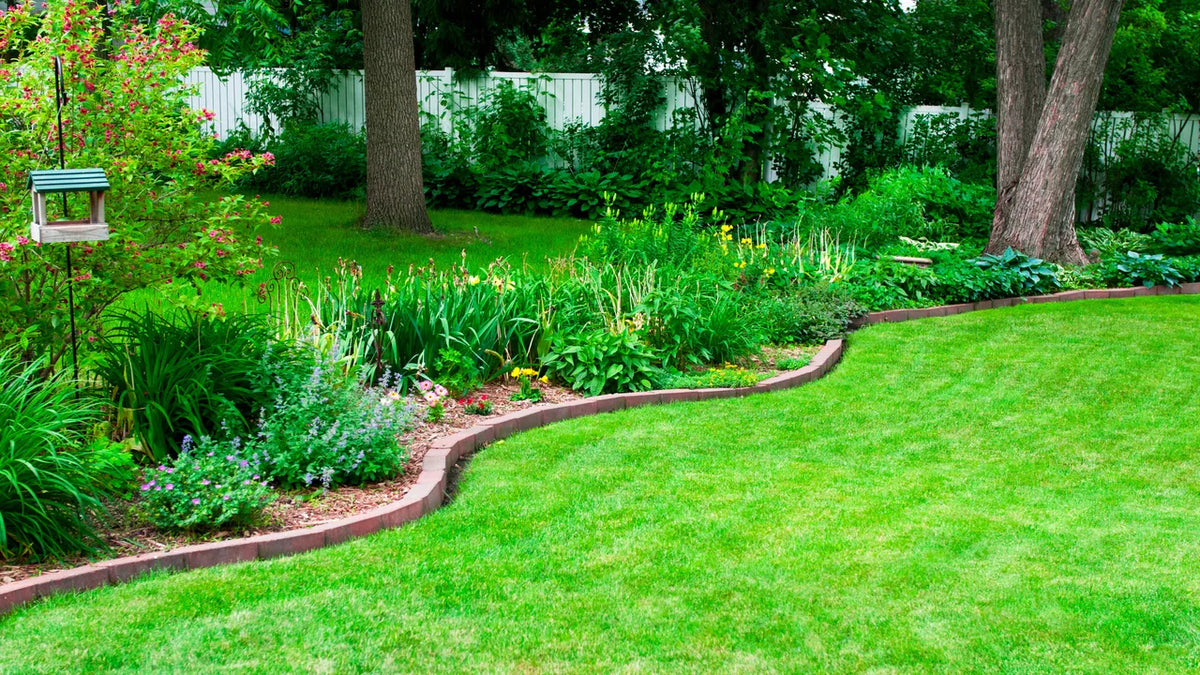
A well-maintained lawn includes neatly trimmed edges, contributing to overall curb appeal. Without proper edge cutting, lawns may appear untidy, necessitating additional manual labor to achieve the desired look.

Why Robot Mowers Struggle with Lawn Edges?

Traditional robot lawn mowers are designed with central cutting decks. This setup prevents blades from reaching grass along fences, flower beds, and pavement edges. As a result, even the most advanced automatic lawn cutter often leaves a small strip of uncut grass around the perimeter of the lawn.
 
This limitation means that while robot mowers save time and labor, most homeowners still need to manually edge their lawns with a string trimmer or handheld tool. For many, this undermines the promise of “full lawn automation.

Position on Robot Lawn Mower Blades

One key reason is the position of their blades, which are typically located under the center of the mower. This means they physically can't reach right up to walls, fences, flower beds, or narrow corners—leaving a small but noticeable strip of uncut grass along the borders.
 
Placement of robot lawn mower blades

RTK Technology Limitations:

Many robot mowers use boundary wires or GPS technology to define cutting zones. While RTK-GPS has improved accuracy, there are still limitations when it comes to edging.
 
Additionally, even the most modern robotic mowers that rely on RTK (Real-Time Kinematic) GPS technology for centimeter-level precision aren’t foolproof. RTK signals can become unreliable under dense tree cover, next to tall structures, or in areas with signal interference.
 
When that happens, the mower may misjudge boundaries or avoid edges entirely to prevent crossing into unintended zones.

• Boundary wires restrict mowers to fixed paths, which often exclude narrow edges or tight corners.
• GPS-based systems provide centimeter-level accuracy, but uneven surfaces, hardscapes, and tight perimeters still challenge blade placement.

This is why edging has remained a weak point in robotic mowing—until innovative robot lawn edgers like Yarbo’s entered the market.

Limitations of Wired Robot Mowers

Robot lawn mowers with guide or boundary wires also face this challenge as they are unable to cross over the boundary wire which is installed in the edges of the lawn and if the do go over it, they get stuck.
 
And if the boundary wire isn't installed in properly, the robot lawn mower will further not be able to get the edges.

Yarbo's Robot Trimmer:

While robotic mowers can handle 90–95% of the work, edge perfection often still needs a human touch—unless you're using a specialized model like the Yarbo Robotic Trimmer, which is designed to tackle this exact limitation.
 
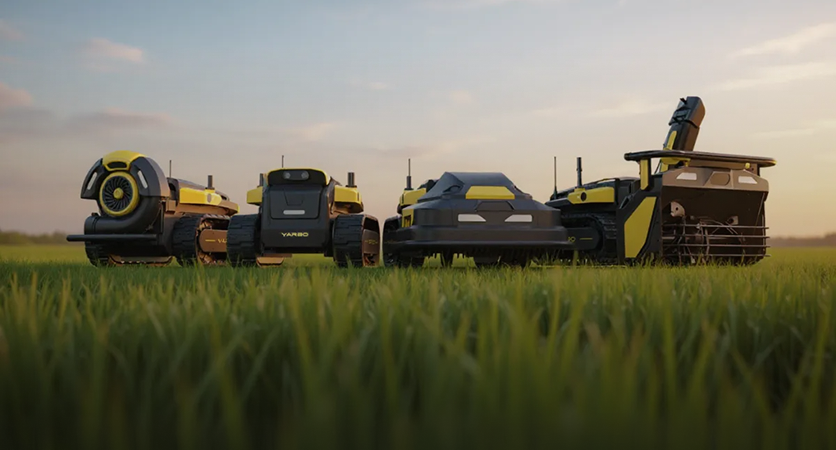
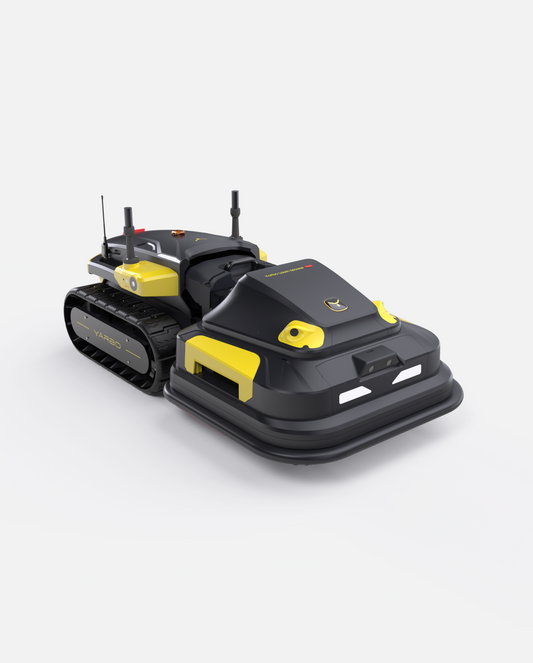
The Yarbo Robotic Trimmer (2025 Edition) is a groundbreaking solution designed specifically to overcome the edge-cutting limitations of traditional robotic mowers. Part of Yarbo’s modular yard care system, this trimmer delivers unparalleled precision, versatility, and autonomy, making it the smartest and most advanced trimmer available in 2025. Here’s what sets it apart:

• AI-Powered Precision: Equipped with high-resolution stereo vision cameras and advanced AI, the Yarbo Trimmer “sees” your yard, navigating around obstacles like trees, garden decor, and flower beds with near-human accuracy.
• Floating Trimming Module: Unlike fixed-position blades, Yarbo’s unique floating module adjusts vertically and horizontally to tackle uneven terrain, ensuring flawless edges along fences, pavements, and contours.
• Automatic Line Feeding: With a 95–99% success rate, the trimmer’s automatic line-feeding system eliminates the hassle of manual line replacements, ensuring uninterrupted operation.

Yarbo trimmer auto lane feeding

• Adjustable Cutting Heights: Customize your lawn’s appearance with cutting heights from 2 to 4 inches, perfect for tailored, professional results.
• Modular Design: Seamlessly switch between trimming, mowing, blowing, or snow-clearing modes with Yarbo’s swappable attachments, offering a complete yard care solution.
• Wire-Free RTK-GPS Navigation: Yarbo’s centimeter-level RTK-GPS ensures precise boundary mapping without boundary wires, overcoming signal interference for reliable edge trimming.
• Eco-Friendly Operation: Powered by a 36V with up to 210 minutes of runtime, the trimmer is emission-free and automatically returns to its docking station for recharging.
• Smart Home Integration: Control and schedule trimming via the Yarbo mobile app, integrating seamlessly with your smart home ecosystem.
• Edge precision: Cuts within 2–4 inches of fences, walls, and hardscapes.
• Seamless integration: Attaches to the back of the Yarbo Core using the Trimmer Back Brace Mount.
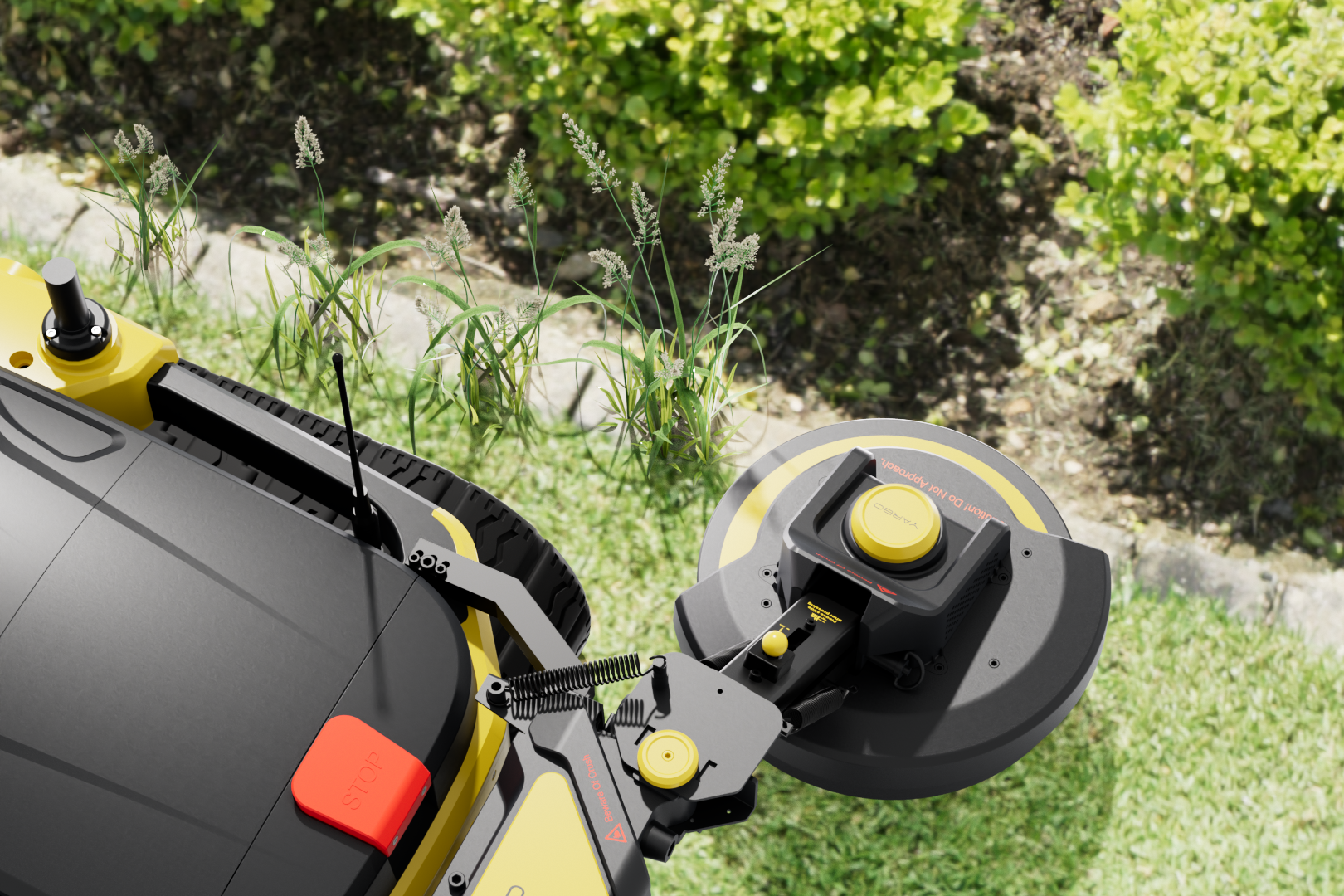
For homeowners with complex landscapes or high aesthetic standards, the Yarbo Trimmer eliminates the need for manual follow-up, delivering flawless edges every time.
 
Yarbo Robot Trimmer

Technologies Enhancing Edge Cutting

What sets Yarbo apart is not just its ability to mow, but its advanced engineering for edging. Here are the technologies that make its robotic edger stand out:

GPS and AI Integration

Modern robotic mowers leverage GPS and AI to map lawn boundaries accurately. These technologies enable precise navigation, ensuring comprehensive coverage, including edges. The Mammotion Luba 2 AWD exemplifies this integration, offering efficient edge trimming.

Sensor-Based Navigation Systems

Sensor-based systems detect obstacles and adjust mowing patterns accordingly. This adaptability allows mowers to navigate complex lawn layouts, maintaining consistent edge cutting performance.

Floating Trimming Module

Unlike fixed-blade systems, Yarbo’s floating trimming mechanism adjusts automatically to uneven terrain, maintaining consistent cutting height from 2 to 4 inches.

Automatic Line Feed

With a 95–99% success rate, Yarbo’s auto-line feeding ensures uninterrupted trimming without manual adjustments. This feature saves time and eliminates one of the biggest frustrations with traditional string trimmers.

Wire-Free RTK-GPS Navigation

Yarbo’s wire-free system removes the hassle of installing perimeter wires. Instead, the mower and trimmer navigate lawns with centimeter-level accuracy, even in large or complex yards.

Eco-Friendly Battery & Smart-Home Integration

Running on rechargeable batteries, Yarbo’s mower and trimmer are eco-friendly alternatives to gas-powered tools. With mobile app control, homeowners can schedule mowing and edging, monitor performance, and manage updates seamlessly.

Limitations and Challenges

Physical Obstacles and Lawn Layouts

Robotic mowers may struggle with tight corners, narrow passages, or areas with dense vegetation. These physical constraints can hinder edge cutting effectiveness, requiring occasional manual intervention.

Battery Life and Coverage Area

Battery limitations can affect a mower's ability to cover large areas, including edges. Frequent recharging may interrupt mowing cycles, leading to uneven trimming along perimeters.

User Experiences and Reviews

Many users report satisfaction with Automatic lawn cutter' edge-cutting capabilities, particularly with advanced models. The convenience of automated lawn maintenance, including edge trimming, is a significant advantage.
 
Yarbo lawn mower trimmer arm
 
However, some users express frustration over mowers missing edges, especially in complex lawn layouts. Discussions on forums highlight the need for improved edge-cutting performance in certain models.
 
By integrating mowing and edging, Yarbo delivers a truly complete lawn care solution. Here’s what homeowners can expect:


• Flawless lawn appearance: No more uneven strips or untrimmed borders.
• Time savings: Eliminate the need for manual edging after mowing.
• Hands-free convenience: Automation from start to finish.
• Versatility: The trimmer works with both the Lawn Mower and Lawn Mower Pro modules.
• Eco-conscious design: Lower emissions and quieter operation compared to traditional trimmers.

With Yarbo’s mower and trimmer combo, your yard isn’t just cut—it’s perfected.

Future of Edge Cutting in Robotic Mowers

Emerging Technologies and Innovations

Advancements in AI, sensor technology, and machine learning promise improved edge-cutting capabilities. Future models may offer enhanced adaptability to various lawn layouts and obstacles.

Market Trends and Consumer Expectations

As consumer demand for comprehensive lawn care solutions grows, manufacturers are focusing on developing mowers with superior edge-cutting performance. Innovations in this area are expected to become standard features in upcoming models.
 
As the industry continues to evolve, we can expect robotic mowers to become even smarter—cutting edges cleaner, handling obstacles better, and giving homeowners back more of their weekends.
 
So, do robot mowers cut edges? Most don’t—but Yarbo does. Traditional robot mowers excel at large lawns but fall short when it comes to borders. With its robot lawn edger and trimmer module, Yarbo fills that gap, offering complete automation for mowing and edging alike.
 
By combining AI precisionfloating trim technology, and wire-free navigation, Yarbo ensures your lawn is perfectly maintained from center to edge. For homeowners seeking the ultimate automatic lawn cutter experience, Yarbo is more than just a mower—it’s the future of yard care.

FAQs

Q1: What is an automatic lawn cutter, and can it trim edges?

An automatic lawn cutter—such as a robotic mower—uses technologies like RTK-GPS and vision to mow autonomously. However, most can’t trim edges precisely because the blades are centrally located, leaving uncut strips near fences or borders. Yarbo solves this with its Robotic Trimmer designed for precise edge cutting.

Q2: Why should I consider a robotic edger instead of manual trimming?

The robot lawn edger automates edging, significantly reducing manual labor. It cuts within 2–4 inches of surfaces using a floating trimming module, AI vision, and auto-line feed—achieving flawless edges while you relax.

Q3: Can I manually adjust my robotic mower to improve edge trimming?

Yes. You can often tweak boundary wire placement or use app settings to get closer to edges. Some users also manually trim problem spots the mower can't reach. Regular software updates also help improve mapping and cutting accuracy.
 
Q4: What makes the Yarbo robotic edger unique?
The Yarbo robot lawn edger boasts:

• AI stereoscopic vision for smart navigation
• Floating trimming module for uneven terrain
• Automatic line-feeding (95–99% success rate)
• Wire-free RTK-GPS navigation
• Runtime up to 210 minutes, with auto-recharge—all integrated via the Yarbo mobile app.

Q5: How close to the edge do robot mowers typically cut?

Most high-end mowers cut within 2–3 inches of the edge. Models like the Luba 2 AWD claim to cut almost flush with the lawn's boundary due to their advanced positioning system. Budget models might leave 4–6 inches uncut.

Q6: Do robot mowers work well around flower beds and garden borders?

With proper boundary settings, many robot mowers can mow near flower beds. However, their precision around irregular shapes varies by model. Some may require additional trimming for clean lines around complex landscaping.
Back to blog